
What Is UV DTF Printing and What Can You Print With It?
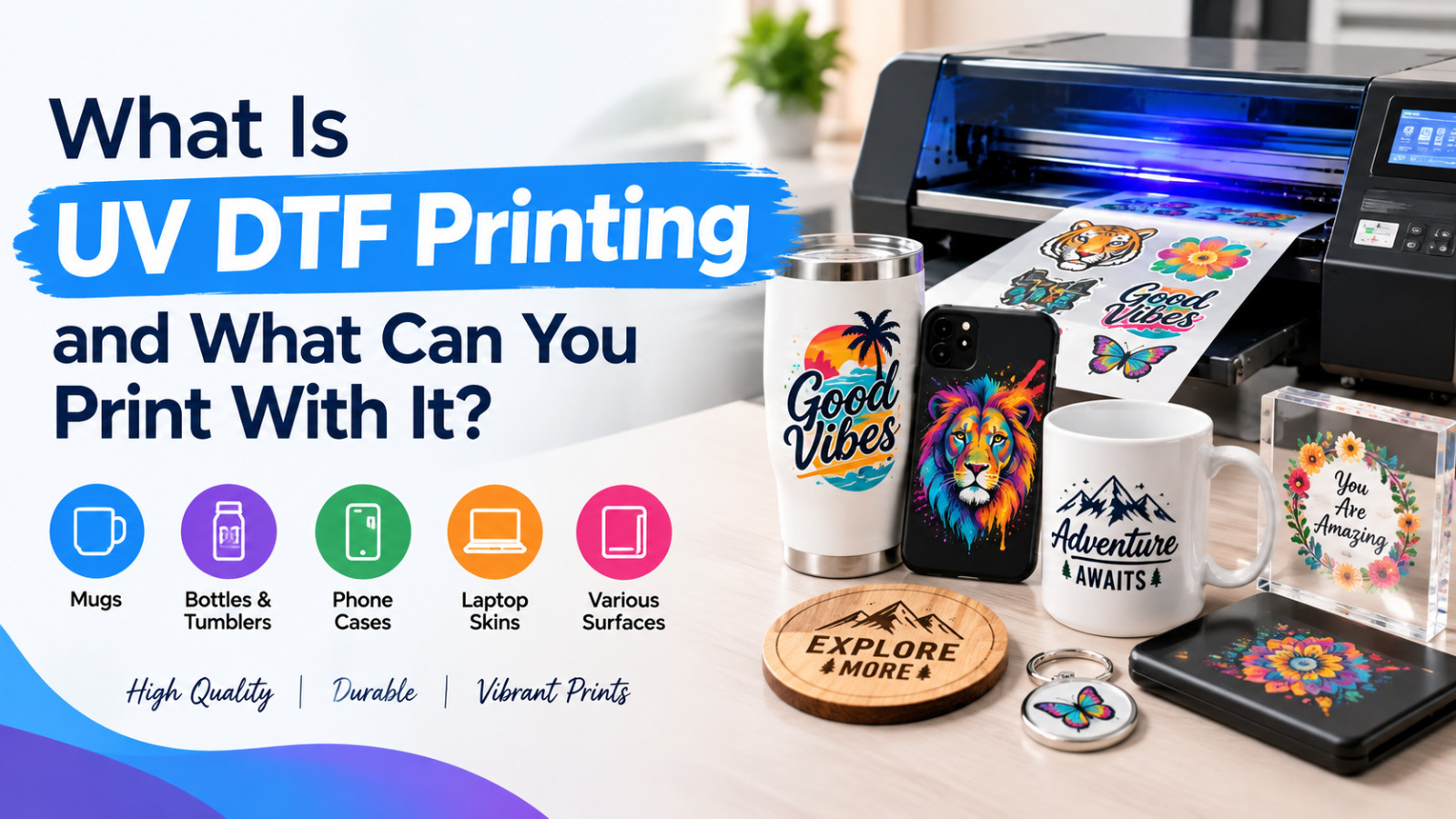
What Is UV DTF Printing and What Can You Print With It?
UV DTF printing is becoming a popular choice for businesses and creators who want to customise products made from glass, metal, acrylic, ceramic and other compatible hard materials. From personalised tumblers and phone cases to branded packaging and promotional gifts, this printing method offers a convenient way to apply detailed designs to a wide range of products.
Unlike traditional Direct-to-Film (DTF) printing, which is primarily designed for fabric and apparel, UV DTF printing focuses on decorating hard surfaces. It uses UV-curable inks and specialised transfer films to create designs that can be applied without a heat press.
But what exactly is UV DTF printing, how does it work, and what can you print with it? This guide explains the process, suitable materials, practical applications and key differences between UV DTF and regular DTF printing.
What Is UV DTF Printing?
UV DTF printing stands for Ultraviolet Direct-to-Film printing. It is a transfer printing method in which a design is printed onto a specialised film using UV-curable inks. The ink is cured with ultraviolet light during production, and the printed design is prepared as an adhesive transfer that can be applied to a compatible surface.
Instead of printing directly onto an object, UV DTF printing allows you to create a design on film and transfer it to the final product. This makes it useful for decorating items that may be difficult to position inside a conventional printer.
UV DTF transfers are commonly used on smooth, rigid surfaces such as glass, acrylic, metal, glazed ceramic and certain hard plastics. Depending on the design and transfer system, the finished result can feature vibrant colours, fine details and a slightly raised appearance.
Some key advantages of UV DTF printing include:
- Versatile applications: Decorate a variety of compatible hard-surface products.
- Detailed designs: Reproduce colourful artwork, logos, lettering and decorative graphics.
- Convenient application: Apply finished transfers by hand without a heat press.
- Product personalisation: Create customised gifts, accessories and branded merchandise.
- Flexible production: Produce designs for individual items or small batches, depending on your workflow.
UV DTF printing is particularly useful for businesses that want to expand beyond fabric printing and offer customisation for a broader range of products.
How Does UV DTF Printing Work?
Understanding the UV DTF printing process helps explain why this technology is suitable for different hard-surface applications. Although the exact workflow depends on the printer and film system, the process generally involves the following steps.
1. Create Your Design
The process begins with preparing the artwork using suitable design software. You can create business logos, product labels, illustrations, lettering or other graphics.
The design should be prepared according to the printer’s specifications, including the required dimensions, resolution and colour settings.
2. Print the Design on Transfer Film
A UV DTF printer prints the artwork onto a specialised release film using UV-curable inks. Depending on the printer and design requirements, the print may include colour layers, white ink and other finishing layers.
The film holds the artwork until it is ready to be applied to the target product.
3. Cure the Ink Using UV Light
Ultraviolet light cures the ink during printing, helping it form a solid layer on the transfer film. This is different from standard textile DTF, which typically uses adhesive powder and a heat-curing process.
4. Prepare the Transfer
The printed design is combined with the appropriate adhesive or application film according to the transfer system being used. This creates a transfer that can be positioned on the intended product.
5. Apply the Transfer to the Product
The receiving surface must be clean, dry and suitable for adhesion. Position the transfer carefully, press it down evenly and follow the film manufacturer’s instructions for removing the carrier or application film.
The result is a customised design on the product’s surface without requiring the object to pass through the printer itself.
What Can You Print With UV DTF?
One of the biggest advantages of UV DTF printing is the variety of products you can customise. The best results generally come from hard, smooth and non-porous surfaces that provide consistent contact with the transfer adhesive.
Here are some popular applications.
1. Glass Bottles, Jars and Drinkware
Glass is a popular material for UV DTF applications because smooth glass surfaces can provide a suitable base for transfers.
You can use UV DTF designs to customise:
- Glass bottles and decorative jars
- Candle containers
- Drinking glasses and tumblers
- Gift bottles and presentation items
- Decorative glass products
Businesses can add names, logos, illustrations or personalised messages to create unique gifts and branded merchandise.
However, not every glass item is suitable for every application. Transfers should not be assumed to be dishwasher-safe or suitable for food-contact areas unless the product and transfer manufacturers specifically confirm this.
2. Plastic Products and Phone Cases
Compatible rigid plastics are another common application for UV DTF transfers. This method allows businesses to add colourful graphics and branding to a range of everyday accessories.
Examples include:
- Hard phone cases
- Earbud cases
- Plastic containers
- Promotional accessories
- Selected product packaging
For instance, a small business could create customised phone cases featuring names, artwork or brand logos. A company could also decorate compatible plastic promotional products with its branding.
Plastic compatibility varies considerably. Some plastics have low-surface-energy properties or flexible finishes that make reliable adhesion difficult, so testing is recommended before production.
3. Metal Bottles, Tins and Promotional Products
UV DTF printing can also be used to decorate suitable metal surfaces, including compatible coated metals and smooth finished products.
Possible applications include:
- Metal water bottles
- Promotional tins
- Metal nameplates
- Personalised gift items
- Branded accessories
Businesses can use these products for corporate gifts, event merchandise and promotional campaigns. A colourful logo on a metal container can create a distinctive appearance without requiring the item to be printed directly inside a machine.
The surface finish matters. Smooth, compatible coatings are generally preferable to rough or heavily textured finishes.
4. Acrylic Signs, Keychains and Decorative Items
Acrylic is widely used for signage, displays and personalised accessories. Its smooth surface makes it a useful option for compatible UV DTF transfers.
Some possible products include:
- Acrylic keychains
- Nameplates and desk signs
- Decorative plaques
- Display pieces
- Promotional merchandise
- Custom labels for acrylic products
For example, a business could personalise acrylic keychains with names or logos, while a retailer could create branded display accessories.
UV DTF transfers can be particularly useful when producing small decorative designs without needing to print directly onto each individual item.
5. Ceramic Mugs, Tiles and Decorative Products
Glazed ceramic products can also be suitable for UV DTF printing when their surfaces are compatible with the transfer system.
Potential applications include:
- Decorative ceramic mugs
- Ceramic tiles
- Personalised gift items
- Decorative ornaments
- Selected ceramic containers
These products can be customised with illustrations, names, patterns or business logos. They may be suitable for gifting, home décor and promotional use.
However, a transfer applied to the outside of a mug is not automatically safe for dishwasher use, microwave use or contact with food. Always check the intended product’s care requirements and manufacturer guidance.
6. Finished Wood Products and Gift Items
Sealed, painted or otherwise suitably finished wood products may also accept UV DTF transfers. Raw wood can be porous and uneven, which may prevent consistent adhesion.
Examples of potential applications include:
- Finished wooden plaques
- Decorative gift boxes
- Personalised ornaments
- Painted wooden signs
- Selected wooden accessories
A personalised wooden gift box or decorative plaque can combine a natural appearance with colourful lettering or artwork. Before applying transfers to a large batch, test the finish to ensure the design adheres properly.
What Materials Can UV DTF Transfers Stick To?
UV DTF printing is versatile, but material compatibility should never be assumed based on the material name alone. Surface texture, coatings, cleanliness and the adhesive system all affect the result.
|
Material |
Example applications |
Important consideration |
|
Glass |
Bottles, jars, decorative glass |
Use clean, smooth surfaces |
|
Metal |
Tins, bottles, promotional items |
Check the finish and coating |
|
Acrylic |
Signs, keychains, displays |
Ensure the surface is clean |
|
Hard plastic |
Phone cases, containers |
Test the specific plastic |
|
Glazed ceramic |
Decorative mugs, tiles |
Check the glaze and intended use |
|
Finished wood |
Plaques, gift boxes |
Sealed finishes are preferable |
For the best results, clean and dry the receiving surface before application. Avoid oily, dusty, wet or heavily textured surfaces. When using a new material, test a sample and check adhesion before committing to a full production run.
What Should You Not Use UV DTF Printing On?
Although UV DTF printing works across many hard-surface applications, it is not designed for every material.
Clothing and Stretchable Fabrics
UV DTF transfers are not intended to replace regular DTF transfers for T-shirts, hoodies, tote bags and other garments. Fabric moves and stretches, which can cause a rigid UV DTF design to crack, lift or become uncomfortable.
For apparel, standard textile DTF or another fabric-compatible printing method is a better choice.
Rough or Highly Textured Surfaces
Rough wood, uneven stone, heavily textured coatings and irregular surfaces may prevent the transfer adhesive from making consistent contact. This can cause incomplete adhesion or lifting around the edges.
Flexible or Difficult-to-Bond Materials
Silicone, rubber and some specialised plastics can be difficult to decorate reliably with conventional UV DTF transfers. Compatibility depends on the material and transfer system.
The best approach is to choose a suitable printing method for the product rather than assuming every surface will accept the same transfer.
UV DTF vs Regular DTF Printing: What Is the Difference?
UV DTF and regular DTF printing both use film to carry a design, but they serve different purposes.
|
Feature |
UV DTF Printing |
Regular DTF Printing |
|
Main application |
Compatible hard surfaces |
Fabric and apparel |
|
Typical materials |
Glass, acrylic, metal, selected plastics |
Cotton, polyester and fabric blends |
|
Ink technology |
UV-curable inks |
Textile pigment inks |
|
Curing process |
UV light during production |
Adhesive powder is heat-cured |
|
Application |
Pressure-applied transfer |
Heat press |
|
Common products |
Bottles, signs, cases and gifts |
T-shirts, hoodies and tote bags |
The most important difference is the intended application. UV DTF printing is suitable for decorating compatible hard goods, whereas regular DTF is designed for textiles.
If your business mainly produces apparel, standard DTF is generally the relevant technology. If you want to customise drinkware, accessories, packaging or decorative hard goods, UV DTF may be worth exploring.
Is UV DTF Printing Suitable for Small Businesses?
UV DTF printing can open up opportunities for businesses that sell personalised products, promotional merchandise or customised gifts.
A business could offer branded bottles, personalised accessories, decorative signs, gift items or product labels. Because transfers can be applied to individual products, the method may also be useful for small custom orders and varied designs.
Before investing in a UV DTF printer, consider your target market, expected order volume, available workspace, consumable costs, maintenance requirements and the types of products you plan to decorate.
It is also worth comparing in-house production with purchasing ready-made UV DTF transfers. Producing transfers yourself gives you more direct control over printing, while outsourcing may be more practical when demand is low or inconsistent.
If you are exploring equipment for hard-surface printing, browse the relevant Rokuprints printing solutions and compare available machines with your production requirements.
Frequently Asked Questions About UV DTF Printing
What is UV DTF printing used for?
UV DTF printing is used to create transfers for decorating compatible hard surfaces. Common applications include glass bottles, acrylic signs, phone cases, metal accessories, glazed ceramic products and promotional merchandise.
Does UV DTF printing require a heat press?
No. UV DTF transfers are generally applied using pressure rather than a heat press. The UV ink is cured during the printing process, before the finished transfer is applied to the product.
Are UV DTF stickers waterproof?
Water resistance depends on the transfer materials, adhesive, application quality and intended use. Do not assume a UV DTF transfer is dishwasher-safe or suitable for prolonged water exposure without confirmation from the manufacturer.
Can UV DTF transfers be used on fabric?
UV DTF transfers are not designed for ordinary garment printing. Regular DTF transfers or another textile-compatible printing method should be used for clothing and other fabric products.
How long do UV DTF transfers last?
Their lifespan varies according to surface compatibility, application quality, handling, exposure and cleaning conditions. Proper surface preparation and following the manufacturer’s care instructions can help improve performance.
What is the difference between UV DTF and UV printing?
Direct UV printing applies UV-curable ink directly onto a compatible object using a UV printer. UV DTF printing creates the design on transfer film first, which is then applied to the object. UV DTF can therefore be useful for items that are difficult to position inside a printer.
Conclusion
UV DTF printing provides a practical way to customise a wide range of compatible hard-surface products, from glass bottles and metal accessories to acrylic signs, phone cases and decorative items. Its film-based process makes it possible to apply detailed designs without printing directly onto each object or using a heat press during application.
Understanding what UV DTF printing is, how it works and which materials are compatible will help you choose the right process for your products. Whether you are exploring personalised gifts, branded merchandise or new business opportunities, testing materials and selecting suitable equipment are essential steps toward achieving consistent results.
For businesses considering an expansion into hard-surface customisation, exploring the right printing solutions can be a useful starting point for building a product range that meets customer needs.
Latest Deals for This Week
View All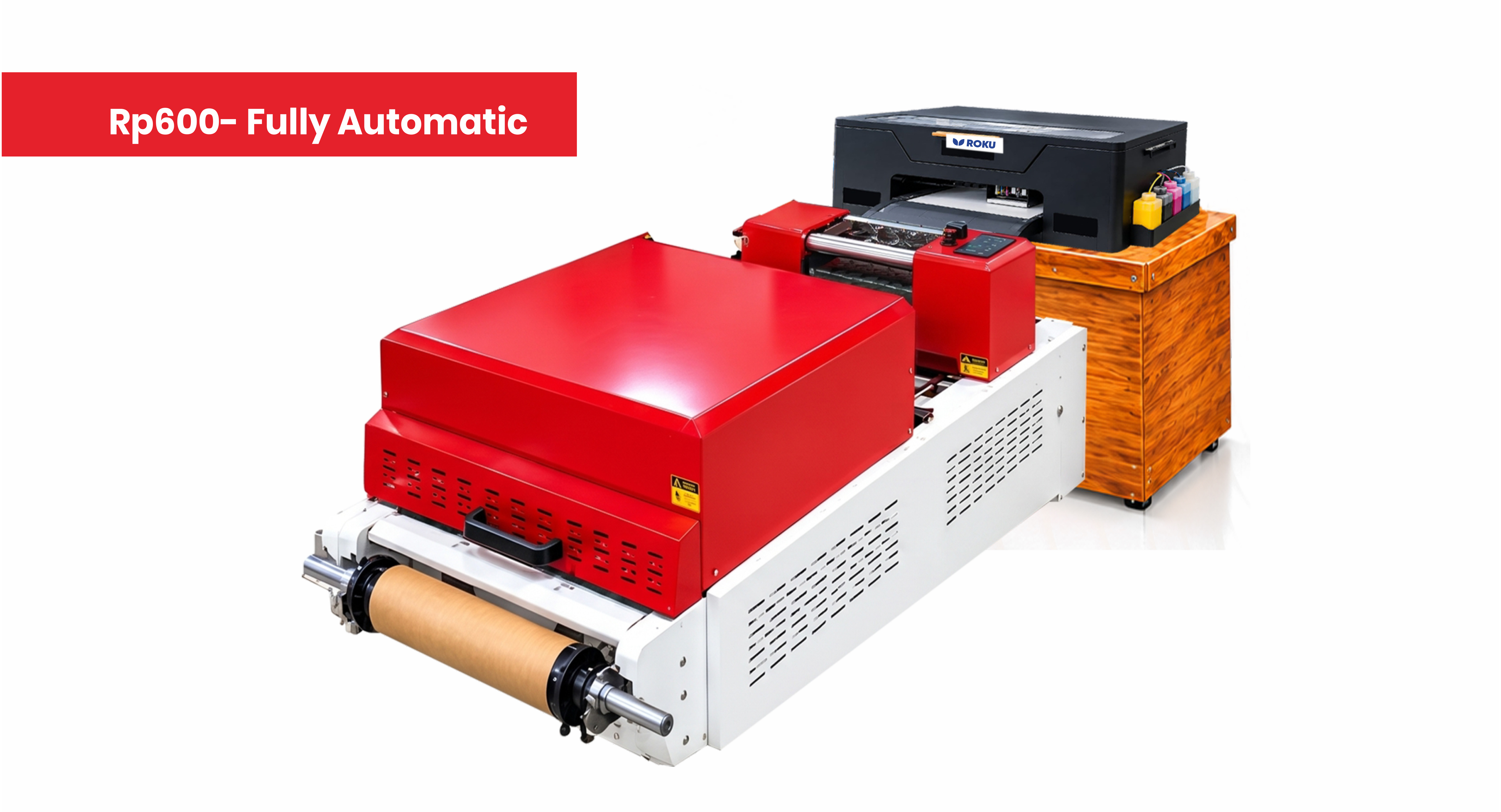
- All-in-one A3 DTF printer with built-in shaker & tunnel dryer
- Continuous roll DTF printer with smokeless curing technology
- Auto-feed, print, powder, cure & rewind system – zero manual steps
- Powerful XP600 with consistent white ink recirculation
- Ideal for transfer sellers, merch factories & contract printing units
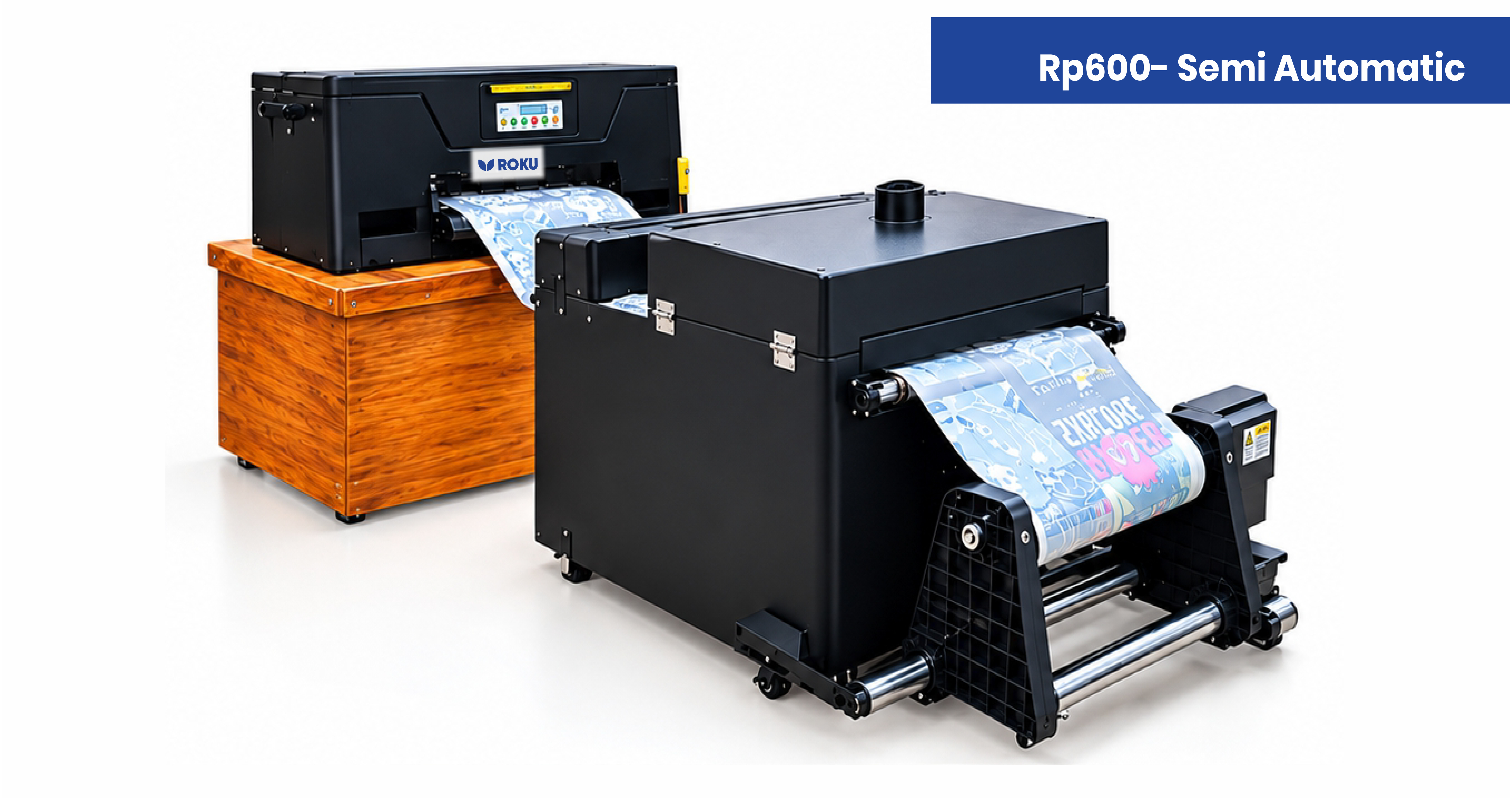
- A3 size DTF printer with separate A3 curing oven included
- Perfect for semi-automatic DTF printing workflow in India
- XP600 DTF printer for high-resolution CMYK + White prints
- Compatible with hot and cold peel DTF films
- Designed for consistent curing and medium-scale apparel printing
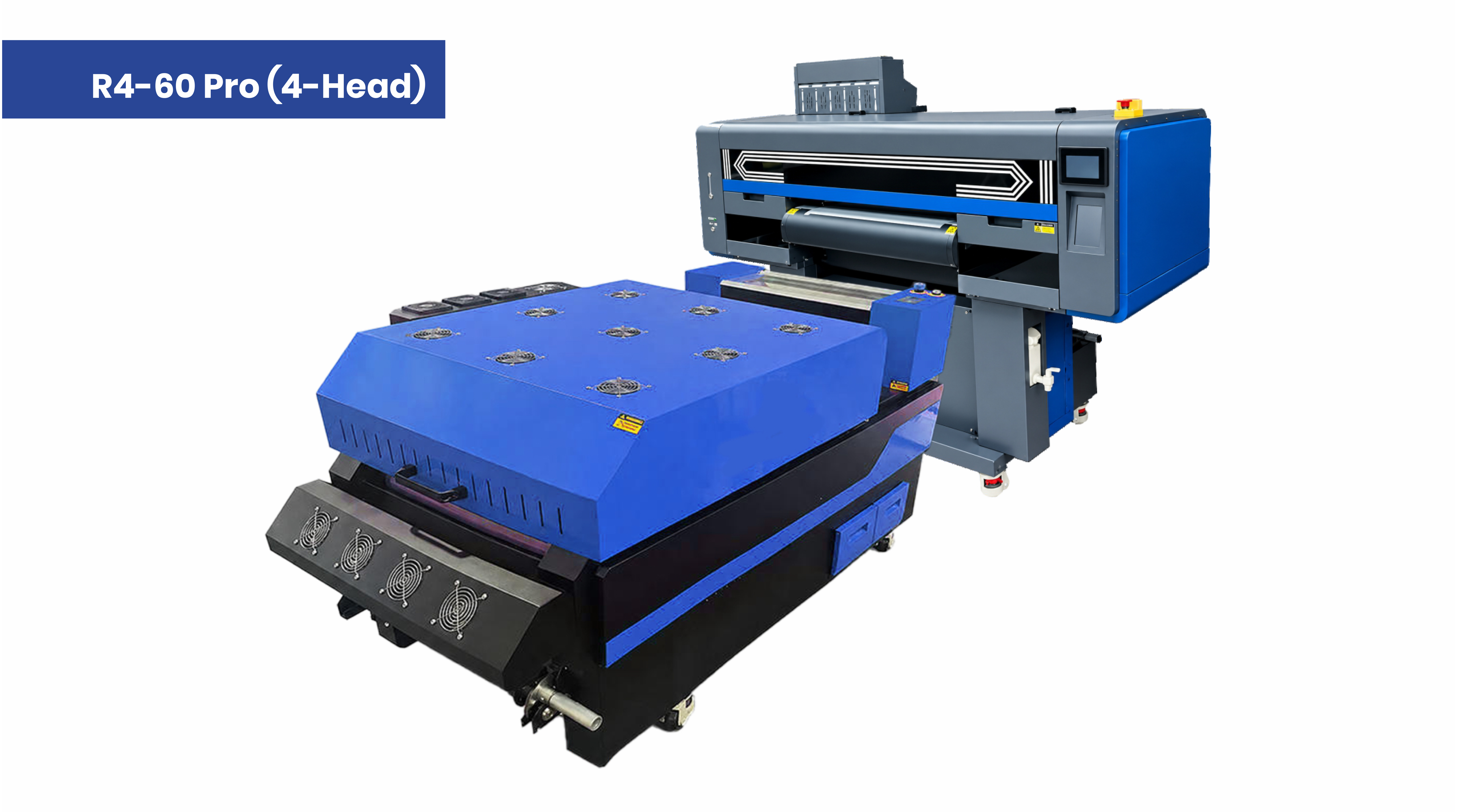
- Top-tier 24 inch DTF printer for export-grade DTF printing in India
- BYHX mainboard with color sync + high-speed RIP compatibility
- Smokeless powder curing system for clean indoor use in metro print shops
- Smart interface with 7″ touch panel, sensor feedback, and ink flow control
- Built for POD factories, custom merch labs & transfer film manufacturing units
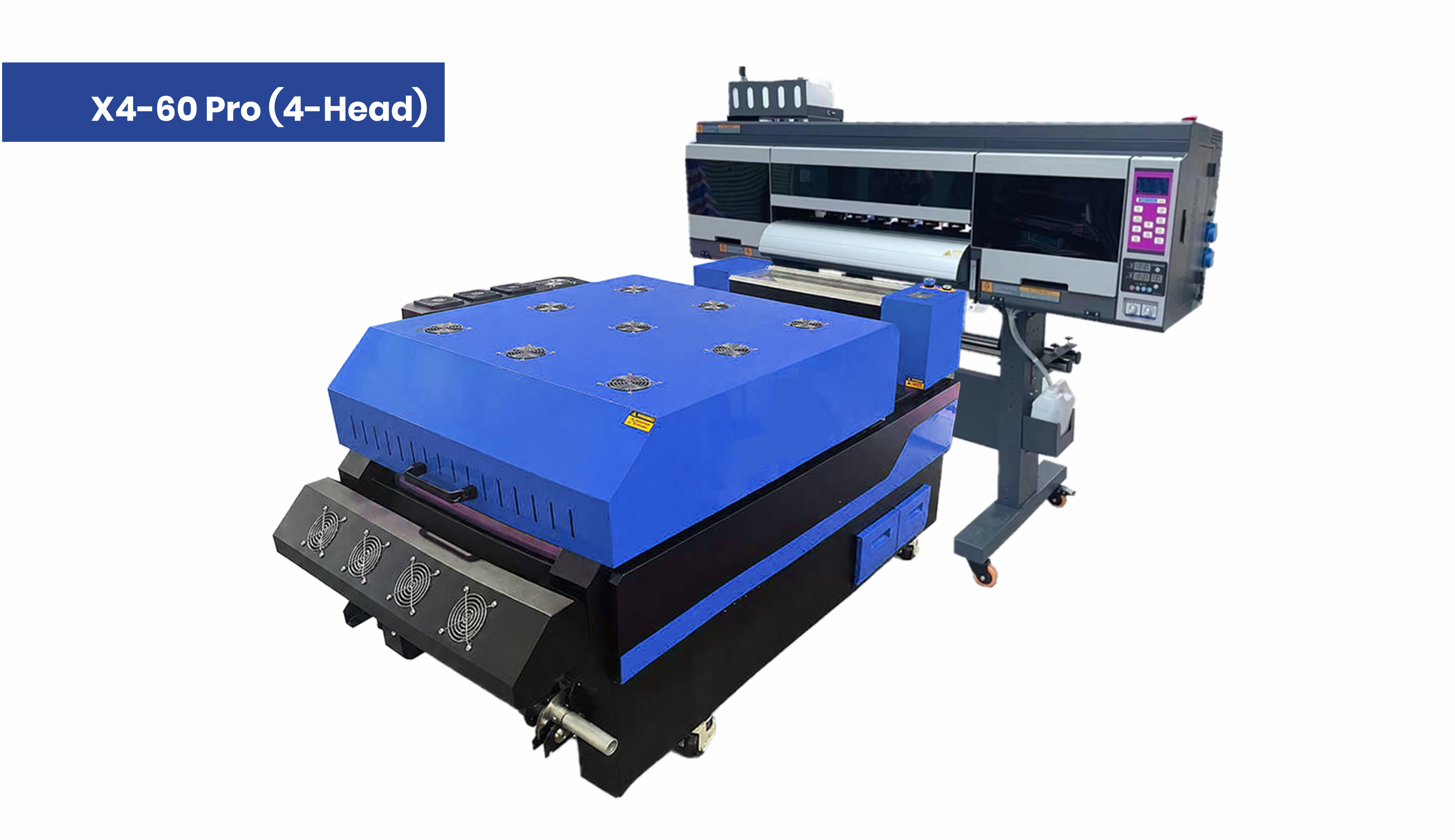
- Industrial 4-head DTF printer with smokeless powder dryer
- Ideal for t-shirt factories, roll transfer exporters, POD production hubs
- High-resolution Epson I3200 heads with wide-format 24-inch film handling
- CMYK + White ink with stable recirculation and CISS for long runs
- Plug-and-play operation with Maintop / Print XP RIP software
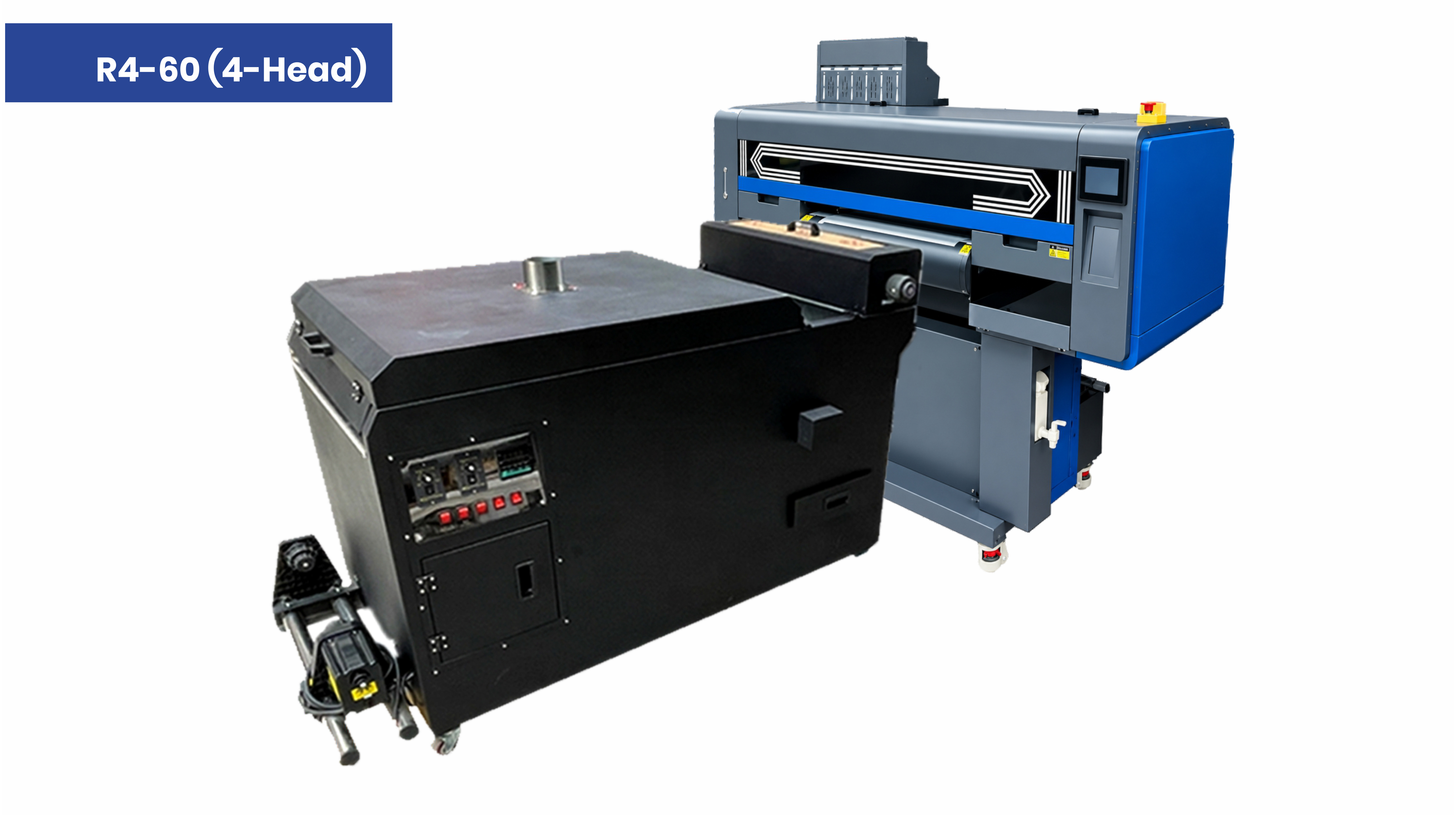
- India’s preferred 4-head 24-inch DTF printer for textile factories
- BYHX high-speed controller with full color sync support
- Auto feed, auto take-up & smart touch control panel for easy operation
- Suitable for garment factories, POD exporters & DTF roll vendors
- Designed for non-stop bulk runs with smart workflow alerts


Celebrating over two decades of manufacturing excellence in China, Roku Prints is a global leader in delivering cutting-edge printers, including our state-of-the-art DTF printers…
Quick Links
Products
- DTF PrintersDirect-to-Film (DTF) printing is a super popular method for creating high-quality, full-color transfers that can be applied to shirts and other garments. If you’re looking for a DTF printing machine for shirts, here’s a quick rundown of what to consider, plus some top options to check out in 2025.
- UV Printers
- DTF Accessories
- Printing Solutions
- Sublimation Printers
Contact Information
 Noida Rd, E-07, Basement floor, Noida, Uttar Pradesh 201301
 +91-9560108015, 9560028016, 9212382730
 info@rokuprints.com
Copyright © 2026 Roku prints. All Rights Reserved.