
What Is DTF Printing? A Complete Beginner’s Guide
What Is DTF Printing? A Complete Beginner’s Guide
DTF printing has quickly become a popular method for creating custom T-shirts, hoodies, bags, and other apparel. Whether you are starting a custom clothing business or simply want to understand how modern garment printing works, you may have come across the term DTF printing.
But what is DTF printing, and how does it actually work?
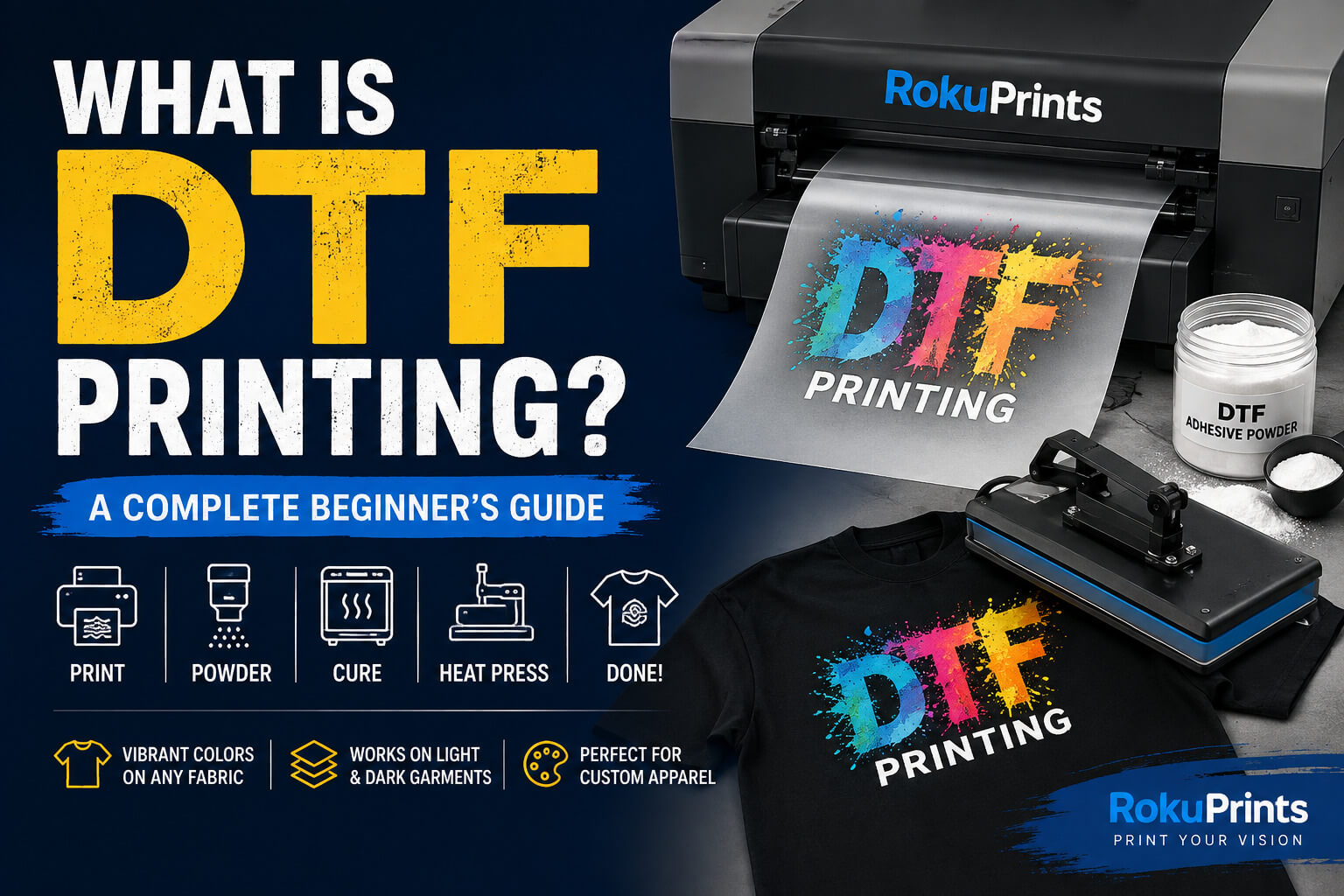
DTF stands for Direct-to-Film printing. Unlike methods where designs are printed directly onto fabric, DTF printing first transfers the design onto a special film. The printed design is then coated with adhesive powder, cured, and transferred onto the garment using heat and pressure.
In this guide, we will explain the DTF printing process, the equipment you need, the types of fabrics you can print on, its advantages and limitations, and why DTF printing has become popular among custom apparel businesses.
What Is DTF Printing?
DTF printing, or Direct-to-Film printing, is a digital printing process used to transfer colorful and detailed designs onto fabrics.
The process starts by printing a digital design onto a special DTF transfer film using a DTF printer. The printer uses specialized textile inks, including CMYK colors and white ink, to create the image.
After printing, a layer of DTF adhesive powder is applied to the printed film. The powder is then heated or cured so that it becomes an adhesive layer. The prepared transfer is placed onto the garment and pressed using a heat press.
Once the transfer is pressed onto the fabric, the film is peeled away, leaving the printed design attached to the garment.
This process allows businesses to create custom apparel with detailed graphics, vibrant colors, text, logos, and photographs.
What Does DTF Stand For?
DTF stands for Direct-to-Film.
The name describes the main feature of the technology. Instead of printing the design directly onto the garment, the design is first printed onto a special film.
The film acts as a temporary carrier for the design. After the design has been printed, adhesive powder is applied and cured. The transfer can then be applied to a garment using heat and pressure.
This approach makes DTF printing suitable for producing customized designs on a variety of apparel and fabric products.
How Does DTF Printing Work?
Understanding the DTF printing process is easier when you break it into individual steps.
1. Create and Prepare the Design
The process begins with a digital design. You can create artwork using graphic design software or prepare an existing logo, illustration, photograph, or text design.
The artwork should have suitable resolution and be prepared correctly for printing. Depending on the workflow and software being used, the design may need to be mirrored before printing.
Proper artwork preparation is important because the quality of the digital file directly affects the final printed result.
2. Print the Design on DTF Film
Once the design is ready, it is sent to the DTF printer.
The printer prints the design onto a special PET film designed for DTF transfers. DTF printers generally use CMYK inks along with white ink.
The colored inks create the visible design, while white ink provides a white base layer. This is particularly useful when transferring colorful designs onto dark-colored garments.
The result is a printed image sitting on the surface of the DTF film.
3. Apply DTF Adhesive Powder
After the design has been printed, DTF adhesive powder is applied to the printed area.
This powder is also known as hot-melt adhesive powder. Its purpose is to help the printed design bond with the fabric during the heat-pressing stage.
The powder needs to be distributed evenly across the printed area. Excess powder should be removed so that only the necessary adhesive remains on the transfer.
Proper powder application is an important part of producing clean and durable DTF transfers.
4. Cure the Adhesive Powder
The adhesive powder needs to be heated or cured before the transfer can be applied to the garment.
During curing, the powder melts and forms an adhesive layer over the printed design. Depending on the production setup, this can be done using dedicated curing equipment or an appropriate heating process.
Proper curing is important because insufficient or uneven curing can affect the quality of the final transfer.
5. Heat Press the Transfer
Once the transfer is prepared, it is positioned on the garment.
A heat press is then used to apply the required heat and pressure. The heat activates the adhesive, allowing the design to bond with the fabric.
The exact temperature, pressure, and pressing time can vary depending on the film, adhesive, garment material, and manufacturer’s instructions.
6. Peel the Film
After heat pressing, the DTF film is peeled away from the garment.
The design remains attached to the fabric, creating the finished print.
Depending on the type of film and transfer process, the film may need to be peeled while hot, warm, or after cooling. Always follow the instructions provided for the specific DTF materials being used.
What Equipment Do You Need for DTF Printing?
Starting DTF printing requires several pieces of equipment and consumables. The exact setup depends on your production volume and business requirements.
DTF Printer
A DTF printer is used to print digital designs onto DTF transfer film. It uses specialized textile inks to produce colorful designs.
DTF Transfer Film
DTF film is the surface onto which the design is printed before it is transferred to the garment.
DTF Ink
DTF printing uses specialized textile inks, typically including CMYK colors and white ink.
DTF Adhesive Powder
The adhesive powder helps the printed design bond to the fabric during heat pressing.
Heat Press
A heat press applies controlled heat and pressure to transfer the design from the film onto the garment.
Curing Equipment
Depending on the workflow, curing equipment can be used to heat the adhesive powder after it has been applied to the printed film.
RIP Software
RIP software helps manage the printing workflow, including color management, white ink settings, and other printer-related controls.
Together, these components form the basic DTF printing equipment setup.
What Fabrics Can You Use for DTF Printing?
One of the reasons DTF printing is popular is its versatility.
DTF transfers can be used on many types of textile materials, including:
- Cotton
- Polyester
- Cotton-polyester blends
- T-shirts
- Hoodies
- Sweatshirts
- Tote bags
- Other suitable fabric products
DTF printing can also be used on both light and dark-colored garments. However, the final result depends on the specific fabric, transfer materials, heat-press settings, and manufacturer’s recommendations.
Before producing a large batch, it is a good practice to test the transfer on the intended fabric.
Advantages of DTF Printing
There are several reasons businesses and apparel creators are interested in DTF printing.
Works With Different Fabrics
DTF printing can be used with a wide range of textile materials, giving apparel businesses more flexibility.
Detailed and Vibrant Designs
DTF technology can reproduce detailed artwork, colorful graphics, logos, text, and other complex designs.
Suitable for Custom Orders
DTF printing works well for personalized apparel and smaller production runs where customers may request different designs.
Suitable for Light and Dark Garments
With the use of white ink, DTF transfers can produce strong designs on both light and dark-colored garments.
No Traditional Screen Setup
Because the design is printed digitally, each artwork can be changed without creating a separate physical screen for every design.
Good for Different Applications
DTF transfers can be used for custom T-shirts, hoodies, bags, promotional clothing, personalized apparel, and other fabric products.
Is DTF Printing Good for Beginners?
DTF printing for beginners can be a good option when the person is willing to learn the complete printing workflow.
The basic concept is relatively straightforward: prepare the artwork, print it onto film, apply adhesive powder, cure the transfer, and heat press it onto the garment.
However, getting consistent results requires attention to detail. Beginners need to learn how to maintain the printer, manage white ink, apply adhesive powder correctly, use appropriate curing settings, and operate the heat press properly.
Starting with simple designs and small projects can help beginners understand the process before moving into larger production.
DTF Printing vs. Other Printing Methods
DTF printing is one of several technologies available for garment decoration, and each method has its own applications.
The right option depends on factors such as the type of design, fabric, order quantity, equipment, and production requirements.
If you want to understand how DTF compares specifically with screen printing, check out our detailed guide “DTF vs Screen Printing: Which Printing Method Is Right for You?”
This can help you understand the differences and decide which printing approach may be more suitable for your particular requirements.
Frequently Asked Questions About DTF Printing
What is DTF printing used for?
DTF printing is commonly used for creating custom designs on T-shirts, hoodies, bags, promotional apparel, and other suitable fabric products.
What is a DTF printer?
A DTF printer is a specialized printer that prints digital designs onto DTF transfer film using textile inks. The printed film is then processed and transferred onto fabric using heat and pressure.
Can DTF printing be used on cotton?
Yes, DTF transfers can be used on cotton garments. They can also be suitable for various other fabrics, depending on the specific transfer materials and manufacturer’s recommendations.
What do you need to start DTF printing?
A basic setup generally includes a DTF printer, transfer film, DTF ink, adhesive powder, heat press, appropriate curing equipment, and software for preparing and managing the print.
How does a DTF transfer work?
A DTF transfer is created by printing a design onto special film, applying adhesive powder, curing the powder, and then transferring the design onto fabric using heat and pressure.
Is DTF printing good for beginners?
Yes, DTF printing can be suitable for beginners. However, learning printer maintenance, ink management, powder application, curing, and heat pressing is essential for achieving consistent results.
Conclusion
So, what is DTF printing? It is a Direct-to-Film printing technology that allows digital designs to be printed onto special film and then transferred onto fabric using adhesive powder, heat, and pressure.
From custom T-shirts and hoodies to personalized apparel and promotional products, DTF printing offers flexibility for a wide range of applications. Its ability to produce detailed designs on different fabrics has made it an increasingly popular choice for apparel businesses and creators.
If you are considering starting with DTF printing, understanding the complete process and choosing the right DTF printer, materials, and equipment are important first steps. With the right setup and proper technique, DTF printing can become a practical solution for producing high-quality custom apparel.


Celebrating over two decades of manufacturing excellence in China, Roku Prints is a global leader in delivering cutting-edge printers, including our state-of-the-art DTF printers…
Quick Links
Products
- DTF PrintersDirect-to-Film (DTF) printing is a super popular method for creating high-quality, full-color transfers that can be applied to shirts and other garments. If you’re looking for a DTF printing machine for shirts, here’s a quick rundown of what to consider, plus some top options to check out in 2025.
- UV Printers
- DTF Accessories
- Printing Solutions
- Sublimation Printers
Contact Information
 Noida Rd, E-07, Basement floor, Noida, Uttar Pradesh 201301
 +91-9560108015, 9560028016, 9212382730
 info@rokuprints.com
Copyright © 2026 Roku prints. All Rights Reserved.