
Subtotal: ₹4,000
What Is Print on Demand (POD)? A Complete Guide for Beginners
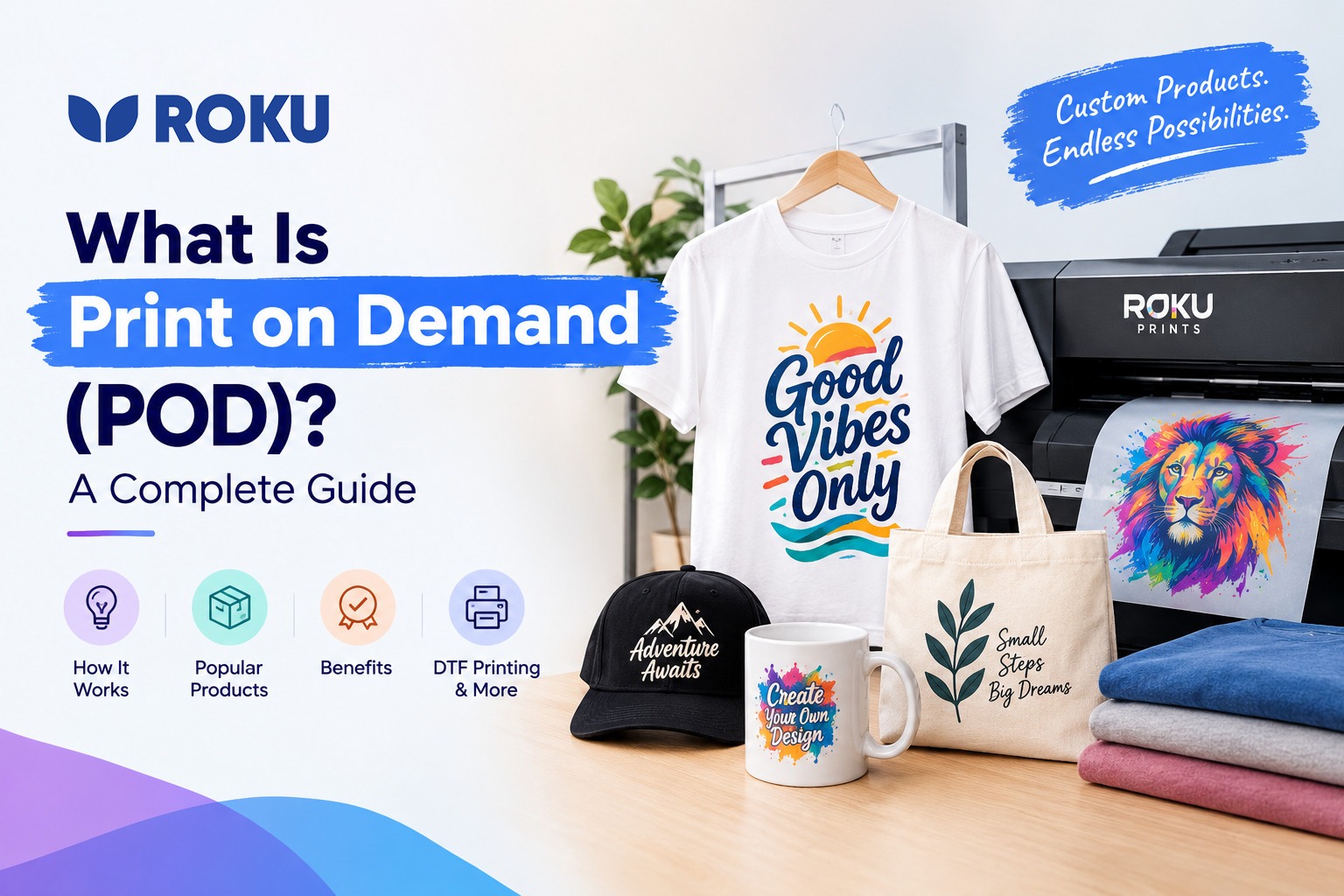
What Is Print on Demand (POD)? A Complete Guide for Beginners
If you have ever wondered how online businesses sell custom T-shirts, hoodies, mugs, tote bags, posters, and other personalised products without keeping large amounts of stock, print on demand (POD) could be the answer.
Print on demand is a business and fulfilment model where products are printed only after a customer places an order. Instead of producing hundreds of products in advance, businesses can create or upload designs and have them printed when needed.
This makes POD an attractive option for entrepreneurs, clothing brands, creators, artists, and small businesses looking to sell customised products with lower inventory requirements.
In this guide, we will explain what print on demand is, how it works, its benefits, popular POD products, and how printing technologies such as DTF can support custom product businesses.
What Is Print on Demand (POD)?
Print on demand is a printing and fulfillment method where a product is manufactured or customised only after an order is received.
For example, imagine you have designed a graphic for a T-shirt. Instead of printing 500 T-shirts and storing them in a warehouse, you can list the design online. When a customer purchases the T-shirt, the design is printed onto the garment and the finished product is prepared for delivery.
This approach reduces the need for businesses to maintain large amounts of inventory.
Print on demand can be used for many different products, including:
- T-shirts
- Hoodies
- Sweatshirts
- Tote bags
- Caps
- Mugs
- Posters
- Phone cases
- Cushions
- Custom apparel
- Promotional products
The exact products available depend on the printing provider and the technology they use.
How Does Print on Demand Work?
The print on demand process is relatively straightforward. It generally involves several steps.
1. Create Your Design
The process starts with a digital design. This could be a logo, illustration, artwork, photograph, slogan, or other creative graphic.
The design should be prepared according to the printing requirements of the product and printing method.
2. Choose a Product
Next, you select the product on which your design will be printed. For an apparel business, this could be a T-shirt, hoodie, sweatshirt, or tote bag.
Different products require different printing techniques, so choosing the right method is important for achieving consistent results.
3. Receive the Customer’s Order
Once your product is available for sale, customers can place orders through your website, online store, marketplace, or another sales channel.
Unlike traditional bulk production, you do not necessarily need to print large quantities before receiving orders.
4. Print the Product
After an order is received, the design is printed onto the selected product using a suitable printing process.
For apparel, technologies such as Direct-to-Film (DTF), direct-to-garment, screen printing, and other methods may be used depending on the product, design, quantity, and desired finish.
5. Fulfil and Ship the Order
Once printing is completed, the product is checked, packaged, and shipped to the customer.
This production-on-demand approach can help businesses avoid storing large quantities of finished products.
What Is DTF Printing and How Does It Fit Into POD?
One printing technology that has become popular for custom apparel is DTF printing.
DTF stands for Direct-to-Film printing. In this process, a design is printed onto a special transfer film using specialised inks. A powder adhesive is then applied before the transfer is cured. The finished transfer can subsequently be heat-pressed onto compatible garments.
If you want to understand the process in more detail, explore What Is DTF Printing? to learn how Direct-to-Film technology works and why it is widely used for custom apparel.
DTF can be useful for POD businesses because it supports detailed, colourful designs and can be suitable for producing individual orders as well as smaller production runs.
It can also work with a variety of garment colours and materials, depending on the equipment, inks, film, powder, and application process being used.
Why Is DTF Printing Popular for Print on Demand?
Print on demand businesses often need flexibility. They may receive orders featuring different designs, colours, garment sizes, and quantities.
DTF printing can provide several useful advantages for this type of production.
Detailed and Colourful Designs
DTF printing can reproduce detailed artwork and vibrant colours, making it suitable for graphics, illustrations, logos, photographs, and other complex designs.
Suitable for Small Orders
Traditional printing methods can sometimes become more economical at higher volumes. POD businesses, however, may need to produce one or only a few products at a time.
DTF can be suitable for this type of short-run custom production.
Variety of Apparel
DTF transfers can be applied to a range of suitable garments, including T-shirts, hoodies, sweatshirts, and other apparel.
Personalisation
Because designs can be changed digitally, businesses can offer personalised products without necessarily creating large quantities of pre-printed inventory.
How to Improve DTF Print Quality
While the printing technology is important, achieving professional results also depends on the entire production process.
If you are using DTF for your POD products, factors such as artwork preparation, print settings, film quality, powder application, curing, temperature, pressure, and garment selection can all affect the final result.
For more detailed guidance, check out [How to Improve DTF Print Quality].
Some general practices that can help include:
- Use high-resolution artwork.
- Prepare files according to the printer’s requirements.
- Use suitable DTF film and powder.
- Maintain consistent curing conditions.
- Select appropriate garments for the application.
- Keep the printer properly maintained.
- Follow recommended heat-press temperature and pressure settings.
- Test new materials before large-scale production.
- Store inks and consumables correctly.
Consistent quality control is especially important for POD businesses because every individual order represents your brand.
what Is a DTF Printer?
A DTF printer is specialised printing equipment designed to print artwork onto DTF transfer film.
Unlike a standard office printer, a DTF printer uses a printing setup designed for textile-transfer applications. The printed film is combined with adhesive powder and processed before being transferred onto the garment using a heat press.
Businesses considering DTF production should evaluate factors such as:
- Print resolution
- Printing speed
- Maximum print width
- Ink compatibility
- White ink management
- Maintenance requirements
- Software and RIP compatibility
- Availability of consumables
- After-sales support
Choosing the appropriate equipment depends on production volume, budget, product range, and business requirements.
If you are researching equipment for custom apparel production, learn more about [DTF Printer] options and the factors to consider before investing.
Benefits of Print on Demand
One of the biggest reasons businesses consider POD is the flexibility it provides.
1. Lower Inventory Requirements
Because products can be produced after an order is received, businesses may not need to purchase and store large quantities of finished products.
2. Reduced Risk of Unsold Stock
Traditional businesses may produce products in bulk and then struggle to sell unpopular designs. POD allows businesses to test designs without necessarily committing to large production quantities.
3. Easy Product Testing
Creators can experiment with different designs, colours, themes, and product types. Products that perform well can then become part of a larger collection.
4. Customisation
POD is particularly useful for personalised products. Customers may be able to select different designs, names, graphics, or other custom elements depending on the business model.
5. Suitable for Small Businesses
Entrepreneurs can start with a relatively small product catalogue and expand as demand grows.
6. More Design Flexibility
Since products are produced individually or in smaller batches, businesses can offer a wide range of designs without necessarily maintaining large quantities of each product.
Print on Demand vs Traditional Printing
Traditional printing and print on demand are not necessarily competing concepts. They are different approaches to production.
Traditional bulk printing generally involves producing a larger quantity of products in advance. This can be highly efficient when demand is predictable and the business needs large volumes.
POD focuses on producing products when orders are received.
For example, a clothing company expecting to sell 5,000 identical promotional T-shirts may benefit from bulk production. A small online brand testing 20 different designs may prefer a more flexible POD approach.
The best method depends on factors such as order volume, product type, budget, turnaround requirements, and desired level of customisation.
Is Print on Demand Profitable?
Print on demand can be profitable, but profitability is not automatic.
A successful POD business needs to consider the complete cost of producing and selling each product. This can include:
- Product cost
- Printing cost
- Packaging
- Shipping
- Platform or marketplace fees
- Marketing expenses
- Payment processing fees
- Returns and replacements
- Design and operational costs
For example, if a product sells for ₹999 but the total cost of producing, marketing, packaging, and delivering it is ₹850, the actual profit is much lower than the selling price suggests.
Businesses should therefore calculate their margins carefully before setting prices.
Product quality is also important. A customer who receives a poorly printed or damaged product may be unlikely to purchase again or recommend the brand.
Who Can Use Print on Demand?
POD can be useful for a wide range of businesses and creators.
Clothing Brands
Small clothing brands can use POD to test designs and launch collections without holding large amounts of inventory.
Artists and Designers
Artists can turn their artwork into products such as T-shirts, posters, tote bags, and other merchandise.
Influencers and Content Creators
Creators can develop branded merchandise for their audiences without necessarily managing a traditional manufacturing operation.
Small Businesses
Businesses can create branded apparel and promotional products for employees, customers, or marketing campaigns.
Entrepreneurs
New entrepreneurs can use POD to test product ideas and understand customer demand before investing heavily in inventory.
Final Thoughts
So, what is print on demand? Simply put, it is a production model where products are printed or manufactured when a customer places an order instead of being produced and stocked in large quantities beforehand.
POD can make it easier for businesses to experiment with designs, offer customised products, reduce inventory requirements, and build an online product business.
For custom apparel, printing technology plays an important role in the final product. DTF printing is one option that can provide flexibility for colourful, detailed, and personalised designs. However, achieving consistent results requires the right equipment, materials, settings, and production process.
Whether you are an established apparel brand, a designer, or someone exploring a new custom-printing business, understanding POD and the available printing technologies can help you choose a production approach that fits your goals.
With the right combination of design, printing technology, product quality, pricing, and customer service, print on demand can become a flexible way to bring creative product ideas to the market.
Latest Deals for This Week
View All- All-in-one A3 DTF printer with built-in shaker & tunnel dryer
- Continuous roll DTF printer with smokeless curing technology
- Auto-feed, print, powder, cure & rewind system – zero manual steps
- Powerful XP600 with consistent white ink recirculation
- Ideal for transfer sellers, merch factories & contract printing units
- A3 size DTF printer with separate A3 curing oven included
- Perfect for semi-automatic DTF printing workflow in India
- XP600 DTF printer for high-resolution CMYK + White prints
- Compatible with hot and cold peel DTF films
- Designed for consistent curing and medium-scale apparel printing
- Top-tier 24 inch DTF printer for export-grade DTF printing in India
- BYHX mainboard with color sync + high-speed RIP compatibility
- Smokeless powder curing system for clean indoor use in metro print shops
- Smart interface with 7″ touch panel, sensor feedback, and ink flow control
- Built for POD factories, custom merch labs & transfer film manufacturing units
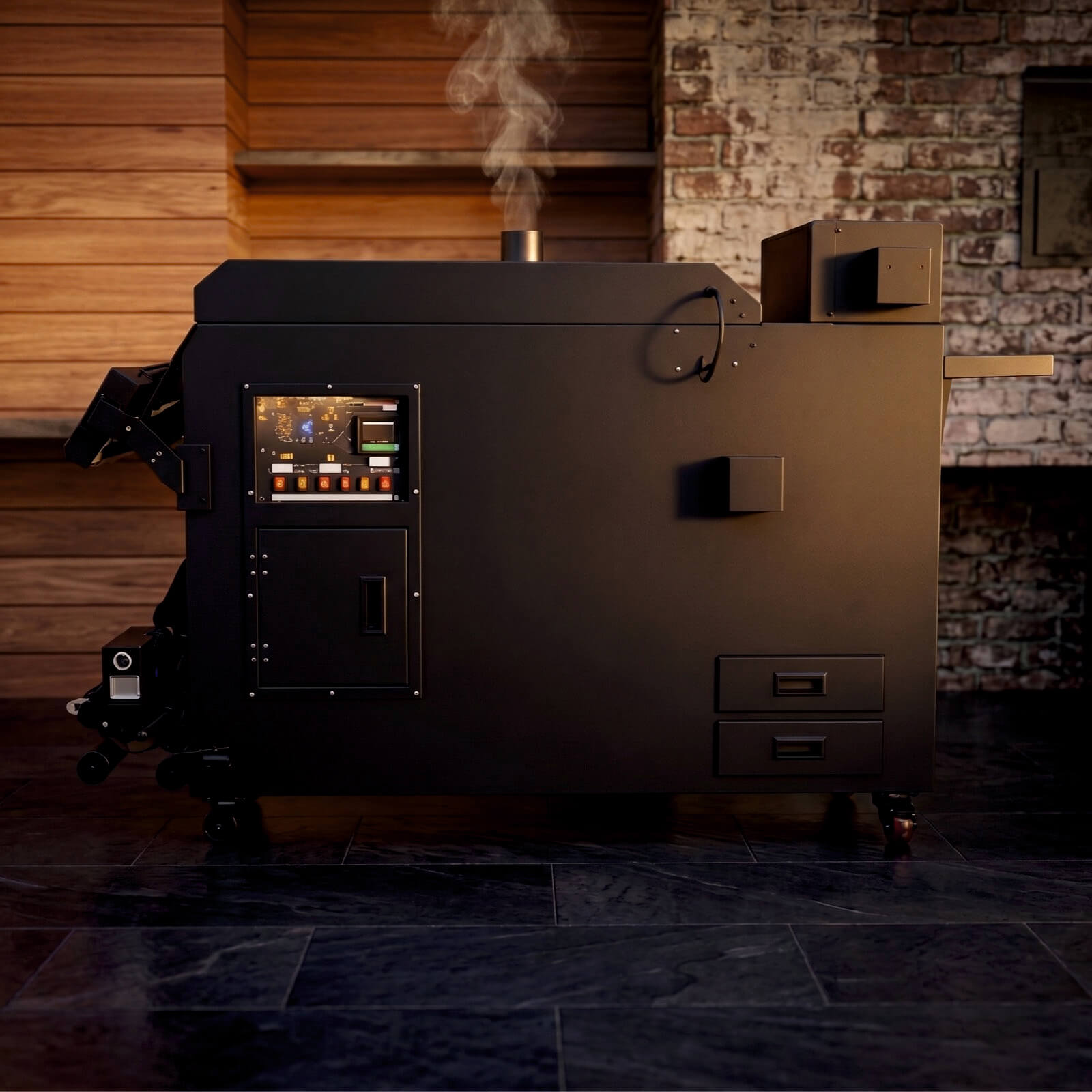
- Industrial 4-head DTF printer with smokeless powder dryer
- Ideal for t-shirt factories, roll transfer exporters, POD production hubs
- High-resolution Epson I3200 heads with wide-format 24-inch film handling
- CMYK + White ink with stable recirculation and CISS for long runs
- Plug-and-play operation with Maintop / Print XP RIP software
- India’s preferred 4-head 24-inch DTF printer for textile factories
- BYHX high-speed controller with full color sync support
- Auto feed, auto take-up & smart touch control panel for easy operation
- Suitable for garment factories, POD exporters & DTF roll vendors
- Designed for non-stop bulk runs with smart workflow alerts


Celebrating over two decades of manufacturing excellence in China, Roku Prints is a global leader in delivering cutting-edge printers, including our state-of-the-art DTF printers…
Quick Links
Products
- DTF PrintersDirect-to-Film (DTF) printing is a super popular method for creating high-quality, full-color transfers that can be applied to shirts and other garments. If you’re looking for a DTF printing machine for shirts, here’s a quick rundown of what to consider, plus some top options to check out in 2025.
- UV Printers
- DTF Accessories
- Printing Solutions
- Sublimation Printers
Contact Information
 Noida Rd, E-07, Basement floor, Noida, Uttar Pradesh 201301
 +91-9560108015, 9560028016, 9212382730
 info@rokuprints.com
Copyright © 2026 Roku prints. All Rights Reserved.